
Hot flashes and night sweats
Waves of heat, waking up drenched, or feeling flushed for no clear reason.
Free Hormone Evaluation for Women
Hot flashes. Brain fog. Weight that will not budge. Hormone shifts in your 30s, 40s, and 50s can quietly take your energy, sleep, and sense of self. A licensed Options provider can help you find out what is going on.
First month free on select hormone programs.
Discount applies to select hormone programs with a minimum 3-month commitment and does not apply to all programs. Medications are prescribed at the discretion of a qualified healthcare provider.
Sound familiar?
If three or more of these have crept into your life, your hormones may be the missing piece. The evaluation helps rule it in or out.
Waves of heat, waking up drenched, or feeling flushed for no clear reason.
Words on the tip of your tongue, scattered focus, or rereading the same paragraph.
Falling asleep is fine, but staying asleep has become the problem.
Especially around the middle, even when your habits have not changed.
Desire feels different and intimacy takes more effort than it used to.
A shorter fuse, low-grade dread, or feeling unlike yourself.
Heavier, lighter, skipped, or closer-together cycles.
Coffee stopped working and rest does not fully reset you.
What's included
Your visit starts with a provider conversation and comprehensive labs. If therapy is appropriate, your plan is personalized around symptoms, biomarkers, and safety monitoring.
Claim my free evaluationA one-on-one visit with a licensed Options medical provider.
Estradiol, progesterone, testosterone, thyroid, metabolic markers, and other clinically relevant labs.
Treatment options may include estradiol, progesterone, supportive therapies, nutrition, and follow-up labs.
What we test and treat
Options looks at the full picture, not one isolated number. These are common markers reviewed during a female hormone evaluation.

Supports sleep, mood, temperature regulation, bone health, and vaginal comfort.
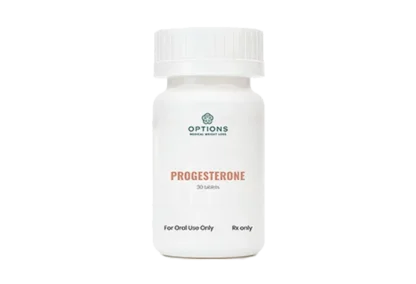
Influences sleep quality, mood, and the balance of estrogen activity.

Women need testosterone too. It supports libido, energy, motivation, and lean muscle.

Fatigue and weight changes can overlap with thyroid and metabolic shifts.

How it works
A care coordinator reaches out to schedule your consultation and lab visit.
Your provider reviews labs, symptoms, goals, and medical history together.
If hormone care is appropriate, you get a plan tailored to your biomarkers.
Follow-up labs and provider check-ins help keep care aligned with your response.
Common questions
If your question is not here, your coordinator can help get an answer from the care team.
A consultation and lab testing help determine whether hormone imbalance may be contributing to your symptoms and whether HRT is appropriate.
Your provider may evaluate hormone balance, thyroid function, metabolic health, blood sugar, cholesterol, and other safety markers.
Timelines vary. Some patients notice changes within weeks, while others improve gradually as treatment is adjusted.
HRT is considered only after a medical history review, lab testing, and provider oversight. Ongoing monitoring is part of care.
Ready when you are
One short form. One provider-led conversation. One plan built around your labs, symptoms, and goals.